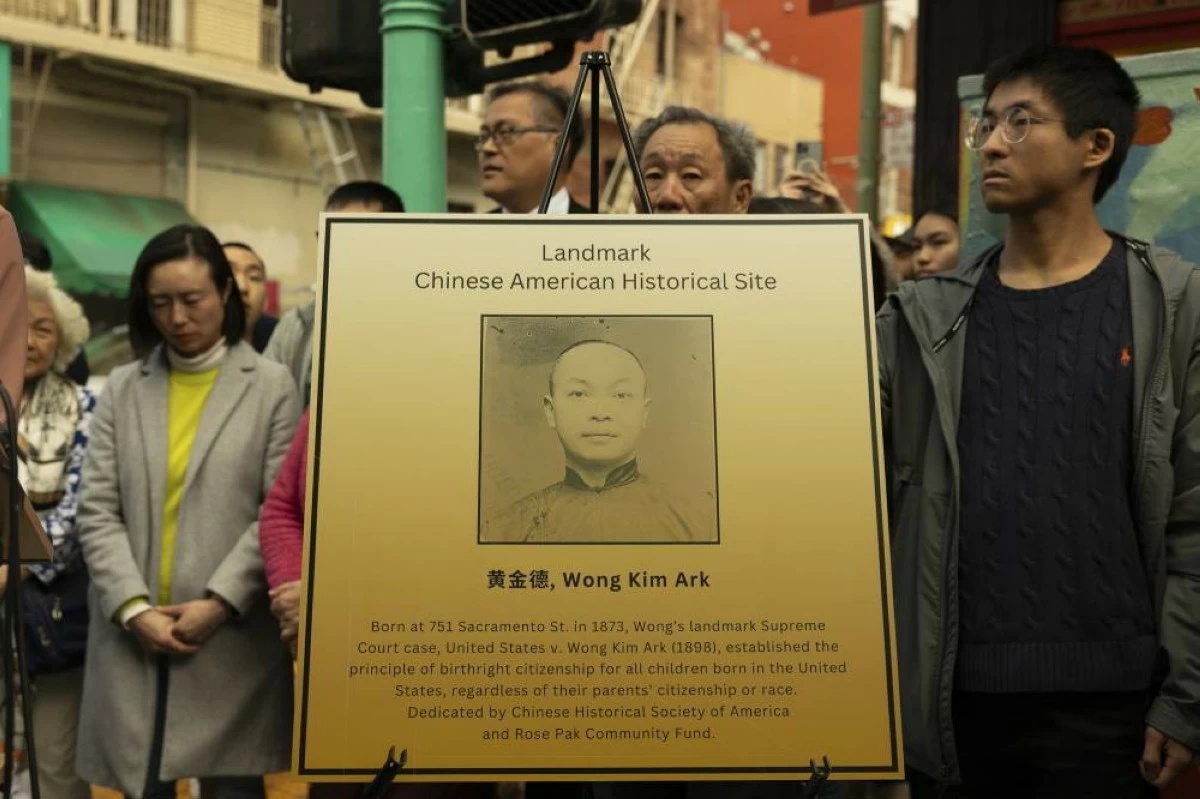
On Wednesday, the Supreme Court will again contest the 128-year-old understanding when it hears arguments on the legality of Trump's executive order that would deny automatic citizenship to babies born in the U.S. if neither parent is a citizen or legal permanent resident. Norman Wong, unaware of his great-grandfather's legacy for most of his life, has since spent years learning about it and last year visited his family's ancestral village in China. On March 28, 1898, the U.S. Supreme Court recognized that the 14th Amendment grants citizenship by birth on U.S. soil, including to those like Wong whose parents were foreign nationals. Now his great-grandson, a San Francisco area resident, fears the principle established by his ancestor's case may be in peril. President Donald Trump's challenge echoes a similar dispute from over a century ago in San Francisco. The Republican president's directive, issued in January 2025 as part of a crackdown on immigration, fulfills long-standing threats to restrict birthright citizenship. The administration claims automatic citizenship incentivizes illegal immigration and 'birth tourism.' In the late 19th century, amid anti-Chinese sentiment, the U.S. government tried to block Wong Kim Ark from re-entering the country after a trip to China, arguing he wasn't a citizen despite being born in the U.S. Wong demanded his citizenship be recognized. Critics call Trump's directive unconstitutional and racially discriminatory. Norman Wong, 76, said the administration is offering 'fake arguments and fake reasons' for a goal contrary to the American dream. 'Trump's fight was settled 128 years ago,' Wong stated. 'We're just revisiting it.'